 By Anosh
Ever-Virgin Mary
Mary is referred to as ever-virgin in the Orthodox liturgy. For example, in the Great Litany we hear this said:
Priest: … Calling to remembrance our all-holy, immaculate, most blessed and glorious Lady, the Theotokos and ever-virgin Mary, with all the saints, let us commend ourselves and each other and all our life unto Christ our God. Choir: To Thee, O Lord.
Priest: For unto thee are due all glory, honor and worship, to the Father and to the Son and to the Holy Spirit, now and ever, and unto ages of ages. Choir: Amen.
Someone from a protestant tradition might find it strange to even think that Jesus was the sole child. It is sometimes assumed that the text of the New Testament proves beyond doubt that Mary bore children after Jesus and this essay will illustrate why that is not the case and show the plausibility of the doctrine of the ever-virginity (perpetual-virginity) of Mary, the Mother of God.
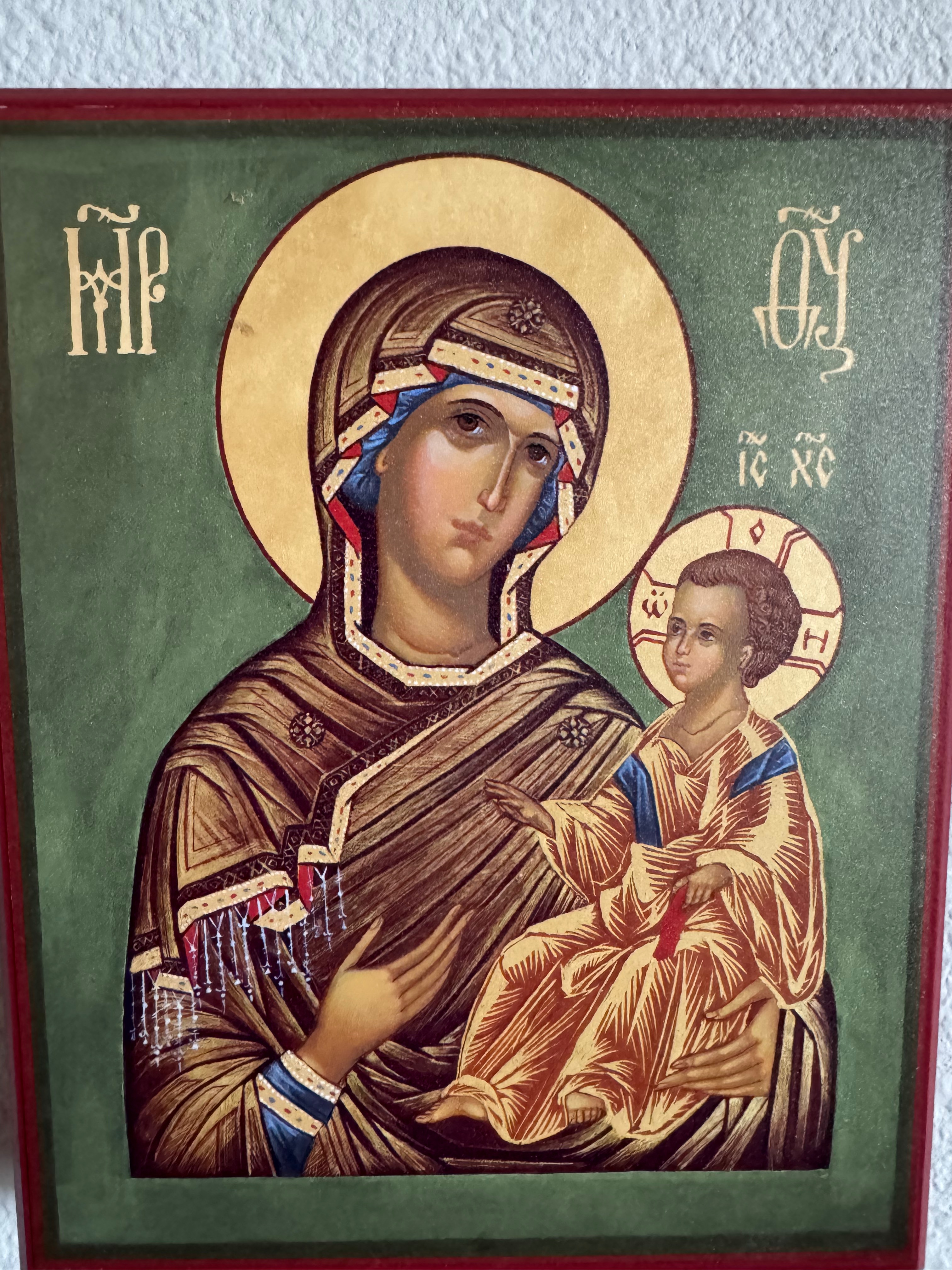
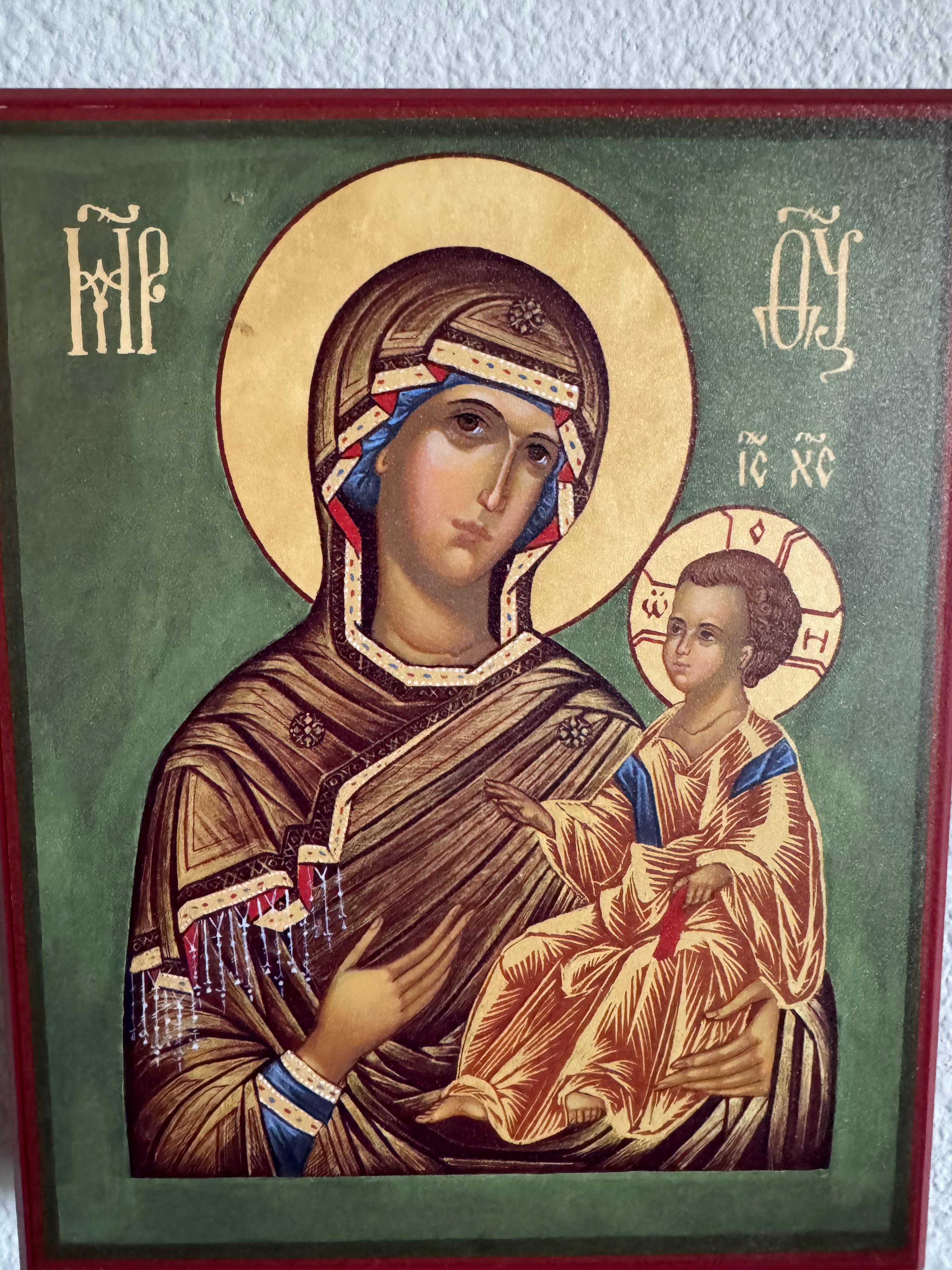
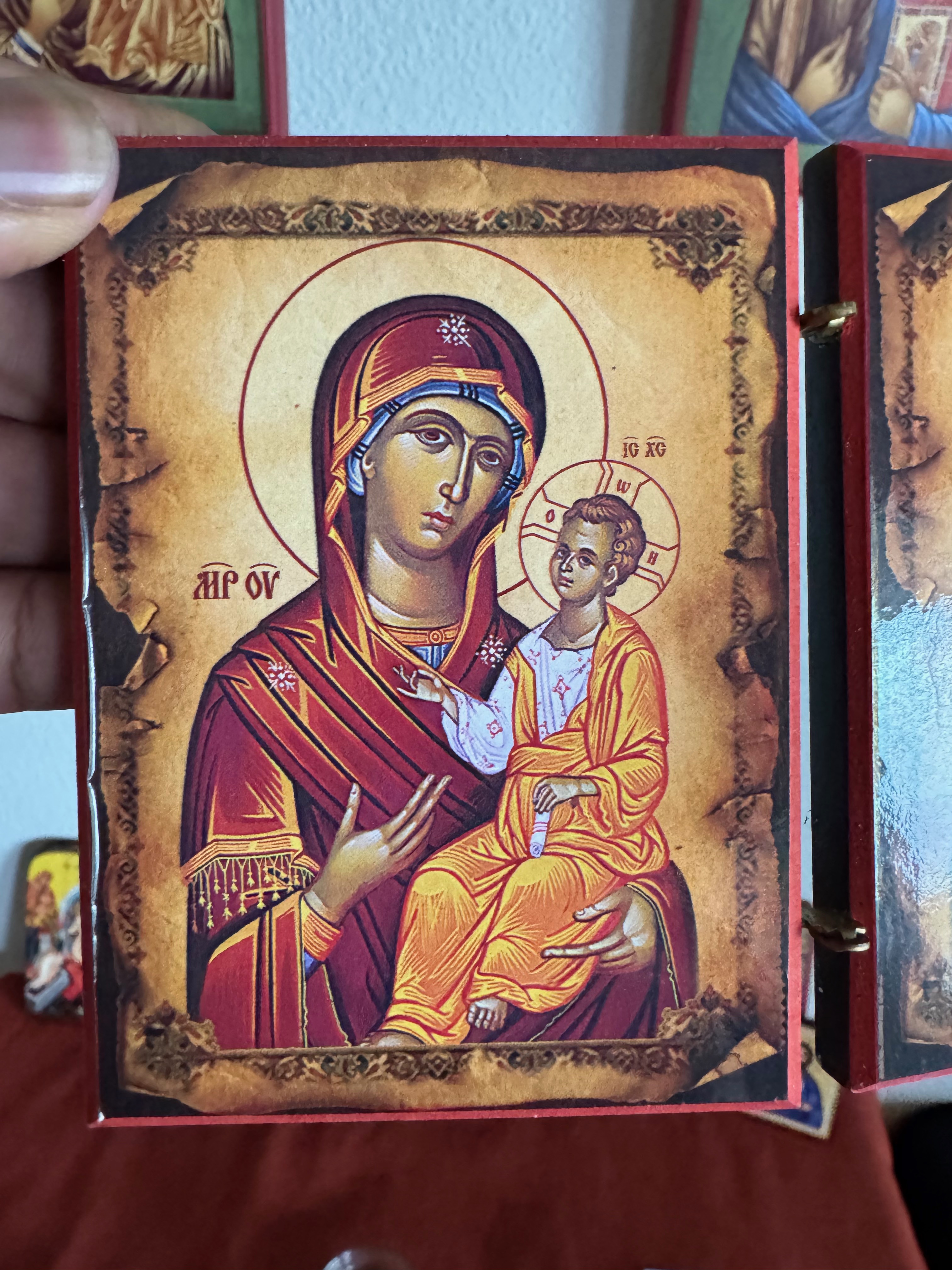
Historically, the Orthodox Church has always taught that Mary was a virgin before, during and after she gave birth to Jesus; this essay concerns the third of these. We know this because it is expressed in the hymnography, icons and traditions. An example of that tradition in icons is seen in the three stars on her robe.
The Witness of the Church Fathers
The consensus of the Church by the 4th century was the ever-virginity. A group called the Antidicomarianites were deemed heretics by the church because they taught contrary to the rest of the Church in this matter. People like Saint Polycarp (69–155 AD), the disciple of John the apostle, his contemporaries St. Ignatius of Antioch (35–108 AD), St. Justin Martyr (90–160 AD), and St. Irenaeus (125–202 AD) are attested to hold that view in the writing of St. Jerome in his work Against Helvidius: The Perpetual Virginity of Mary 19 (AD 383). We do not have any position opposing that view during the time of those afore mentioned. Tertullian's dissent at least tells us the question was live in the early third century.
St. Jerome writes:
"[Helvidius] produces Tertullian as a witness [to his view] and quotes Victorinus, bishop of Petavium. Of Tertullian, I say no more than that he did not belong to the Church. But as regards Victorinus, I assert what has already been proven from the gospel—that he [Victorinus] spoke of the brethren of the Lord not as being sons of Mary but brethren in the sense I have explained, that is to say, brethren in point of kinship, not by nature. [By discussing such things we] are . . . following the tiny streams of opinion. Might I not array against you the whole series of ancient writers? Ignatius, Polycarp, Irenaeus, Justin Martyr, and many other apostolic and eloquent men, who against [the heretics] Ebion, Theodotus of Byzantium, and Valentinus, held these same views and wrote volumes replete with wisdom. If you had ever read what they wrote, you would be a wiser man."
St. Athanasius of Alexandria in his Discourses Against the Arians 2:70 in AD 360 writes the following:
"Let those, therefore, who deny that the Son is by nature from the Father and proper to his essence deny also that he took true human flesh from the ever-virgin Mary."
These two quotes are representative examples which show that by the fourth century, the perpetual-virginity was settled in the Church and thus any dissenters would be seen as heretical. For more quotes from Pope Leo I, Ambrose of Milan, Didymus the Blind, Epiphanius of Salamis the citations can be traced from this linked article.
It should be noted that this view continued to be held in the Reformation as well. Martin Luther and Zwingli both held the view of Mary's ever-virginity. Dave Armstrong's article argues that Calvin did too. The Anglican Church did not dispute it either as we see John Pearson express in his Exposition of the Creed that was first published in 1659. He writes:
[A]s Jacob is called Israel, and Abraham the Friend of God, or Father of the faithful; so is this Mary sufficiently characterized by that inseparable companion of her name, the Virgin. For the full explication whereof more cannot be required, than that we shew, first, That the Messias was to be born of a virgin, according to the prediction of the prophets; secondly, That this Mary, of whom Christ was born, was really a virgin when she bare him according to the relations of the evangelists; thirdly, That being at once the mother of the Son of God, and yet a virgin, she continued for ever in the same virginity, according to the tradition of the fathers and the constant doctrine of the Church. John Pearson, Exposition of the Creed (pg324 in the 1882 publication)
We can surmise that this perspective was not highly controversial even after the Reformation.
The New Testament Objections
In this next section I'm relying on Dr. Nathan Jacobs' lecture series on the Seven Ecumenical Councils; this one in particular is taken from his lecture on the Council of Ephesus.
Do the New Testament texts prove that Mary had other children? Let's examine three texts and one point usually cited to deem the doctrine (of perpetual virginity) unbiblical:
- In Matthew 1:25 it says that Joseph and Mary did not come together sexually until after Christ was born, and clearly "until" must mean that they did afterwards. If so this would imply that she was not a virgin forever; following the birth of Christ, she ceased to be a virgin.
- The second is that in Luke 2:7, Christ is referred to as Mary's "first-born." if he is her firstborn, then does that require a second at least, if not a third born?
- The third in Mark 6:3 and Matthew 13:55–56 we see references to Christ's brothers and his sisters. This points to Jesus having brothers and sisters.
- While not a direct quote a point is raised that if Mary and Joseph did not consummate their marriage, then they're actually not married.
Let's examine these and see if they hold.
- "Until" (ἕως, heos). It is true that in English we use the word "until" to mean up to that point and no further, such as "I'll be at work until six o'clock," and I don't need to say "but I won't be there after six" as it is implied in the word "until." But the Greek word used for until is (ἕως) heos and it has a much wider semantic range. It could mean up to that point and no further but it could also mean up to that point and beyond. An example is when Christ says (in Matthew 28:20) "I will be with you even until the very end of the age"—he does not mean just up to that point but rather to that point and beyond for all eternity. The point is that the Greek word heos is neutral. It is evidence neither for nor against. If we look at its use in Deuteronomy 34:6(no one knows Moses's grave "until this day," which doesn't imply someone found it the next day), 2 Samuel 6:23 (Michal had no child "until the day of her death," and obviously none after), Psalm 72:7 (peace "until the moon is no more"), wuntil' marks a limit without implying a reversal after it. So, this evidence is in neither direction.
- "First-born" (prototokos). Christ is Mary's "first-born," but to be a first born is a second child required? The Greek word used there is prototokos and it doesn't require there to be a second born. Exodus 13:2 and Numbers 3:12-13 show the consecration of the firstborn at birth thus it is about the status not the count. If we consider Hebrews 1:6—when talking about the divine Son of God, His only begotten Son and the second person of the Trinity—the only begotten is referred to as God's prototokos, his first-born. The connotation here is of the heir being the first-born who has or inherits all the father has. It has nothing to do with whether there's a second born—someone who has only one son still has a prototokos, a first-born. And that's how the term is used here, as it's used in Hebrews. Could it be that Christ is the firstborn among many? It could but nothing about that term requires it. Therefore it does not prove Mary had other children.
- "Brothers and sisters" (adelphos, adelphe). What about Christ's brothers and sisters that are mentioned in the gospels? The Greek word adelphos or adelphe has a much wider semantic range. Again, just like the previous two, these words could certainly mean brothers and sisters but it also includes things like cousins, kinsmen, countrymen. Abraham's nephew Lot is referred to as his adelphos in Genesis 13:8 and 14:14–16 in the Septuagint (LXX). This evidence too is neutral and doesn't prove either position. Koine Greek does have a word for cousin, anepsios (Col 4:10). But the Septuagint regularly uses adelphos for relatives who are not siblings, because Hebrew and Aramaic have no everyday word for cousin, and the gospels reflect that Semitic usage. So the word's presence cannot by itself prove biological siblings.
- Consummation and marriage. If Mary and Joseph did not come together, if they didn't consummate the marriage, then they're actually not married. In the context of that time a betrothal was binding. Notice that in Matthew 1:19 Joseph thinks that he's going to—he plans to—write Mary a certificate of divorce. In other words, the betrothal is as good as a marriage such that he would have to divorce her in order to end the engagement, so to speak. And so, unlike in our contemporary context, this one simply doesn't apply.
Plausibility of the tradition
We can look at Christian as well as Rabbinic tradition that talk about sexual abstinence after significant spiritual encounters with God. In Exodus 19:15 the Israelites are told to stay away from their wives at Sinai. The Talmud and Midrash carry the same idea; two examples are Rabbinic commentaries on Numbers 11 where the men "separate" from their wives after a spiritual encounter and Moses abstains from his wife after encountering the Lord. (Check out these references: Sifrei Bamidbar Paragraph 100, Yevamot 62a.) The argument would be that bearing the Son of God, the Second person of the Trinity, is such a significant event that Mary would abstain from any sexual relations and Joseph would too, especially since he was told by an angel that indeed this was the Christ being born. This indeed would not be culturally or religiously a strange notion.
In John 19:25 we see that as Christ is suffering on the cross he makes sure that his mother is taken care of by entrusting her to John's care. He tells Mary to behold her son and he tells John to behold his mother. We presume that Mary is a widow at this point as Joseph is not mentioned from the start of Jesus' ministry in the gospel accounts. In Jewish tradition it was understood that she would be entrusted to her own children, so why does Jesus entrust her to John? Unless we think there's some reason to favour spiritual children over physical children, it's likely that this was because Mary did not have any children other than Jesus. In fact, we see evidence in 1 Timothy 5:3–16 where Paul says that those who don't take care of their own relatives are worse than unbelievers. If one objects on account of the brother's unbelief as John 7:5 says that his own brothers (adelphos) did not believe in him, then 1) we've already called into question weather 'adelphos' proves biological brothers and 2) the command of caring and honoring of one's parent is independent of personal belief. Acts 1:14 places the brothers with Mary within weeks of the crucifixion. If they were her sons, Jesus's choice to pass over them for John is hard to explain; that he did so is best explained by his being her only child.
But what about these other brothers and sisters that are mentioned in Mark 6:3 and Matthew 13:55–56?
Mark 6:3 Isn't this the carpenter, the son of Mary and brother of James, Joses, Judas, and Simon? And aren't his sisters here with us? And so they took offense at him. Matthew 13:55-56 Isn't this the carpenter's son? Isn't his mother named Mary? And aren't his brothers James, Joseph, Simon, and Judas? And aren't all his sisters here with us? Where did he get all this? (NET)
The early Church offered two explanations, both compatible with the perpetual virginity of Mary. The first is the Epiphanian view: that the brothers and sisters of Jesus were Joseph’s children from an earlier marriage and that Joseph was a widower when he was betrothed to Mary. In this view James was the eldest son of Joseph. The second is St. Jerome's cousin theory (Against Helvidius 16): the 'Mary the mother of James and Joses' of Mark 15:40 is Mary the wife of Clopas, whom Jerome takes to be the Virgin's sister, so James and Joses are Jesus's cousins. Jerome is compatible with the second-century Jewish-Christian writer Hegesippus, preserved by Eusebius (Hist. Eccl. 3.11), who records that Clopas was Joseph's brother and that his son Symeon was the Lord's cousin.
Richard Bauckham, the Anglican scholar best known for his book Jesus and the Eyewitnesses, argues in his 'the Relatives of Jesus' article that amongst the Helvidian and Epiphanian view the latter is historically more plausible. Bauckham regards Jerome's cousin theory as the least plausible of the three, so the two ancient explanations are in real tension. But whichever is correct, my point stands: a scholar with no stake in the doctrine finds a reading that preserves Mary's virginity more plausible than the one that denies it.
The Shut Gate of Ezekiel 44
Then he brought me back to the outer gate of the sanctuary, which faces east. And it was shut. And the Lord said to me, "This gate shall remain shut; it shall not be opened, and no one shall enter by it, for the Lord, the God of Israel, has entered by it. Therefore it shall remain shut. Only the prince may sit in it to eat bread before the Lord. He shall enter by way of the vestibule of the gate, and shall go out by the same way."
— Ezekiel 44:1–3
In his vision, Ezekiel is brought to a temple where God's glory comes and shown a prince who will enter. Church fathers like Ambrose of Milan (De institutione virginis 8.52.) have read this as a typology about Mary who is the gate by which the Lord enters. More importantly, the Church has made Ezekiel 43:27–44:4 one of its appointed readings about the Theotokos and Christ: we hear it at Vespers on the feasts of her Nativity, her Entrance into the Temple, and her Dormition.
In the Old Testament and Jewish tradition the shutting of a woman's womb was presumed to be divine judgment (Genesis 20:18, the Lord closes the wombs of Abimelech's household), but here it is contrasted with the idea of being holy—consecrated. In Ezekiel, the gate is shut not as an act of judgement but as the appropriate honour because 'the Lord, the God of Israel' has entered by it. The Church applies this to the Theotokos. She is the gate through which God entered, and her body is therefore a consecrated place, set apart. Her virginity is something that is preserved, not as an act of judgement, but an act of reverence for her as that gate through which our great high Priest (Hebrews 7), who is Christ, entered this world, establishing the eternal priesthood.
This typology is depicted in the icons where the Theotokos stands with outstretched arms in prayer and there is a glowing light where the infant Christ is. The Platytera icon is the best known of these. If the Church always held to the ever-virginity of Mary it is natural to see the typological readings, hymnography and iconography bearing witness to that interpretation.
Weighing the evidence presented on the witness of the Church fathers, the New Testament text and the typological reading of the church, one could be persuaded to give more credence to the tradition.
Conclusion
Every New Testament text said to disprove the doctrine turns out to be compatible with it. The earliest surviving testimony runs almost entirely one way, the Reformers did not break with it, and the details of the gospel narrative (Jesus's care for his mother at the cross, the naming of his brothers) fit it more naturally than the alternative. The question is therefore not settled by proof-texts but by which tradition one trusts to read them. And the Church's liturgy, in reading the shut gate of Ezekiel of the Theotokos, shows how early and how deeply that belief was held. In light of all this, it is reasonable to believe, as the Church has always believed, that Mary remained ever-virgin.
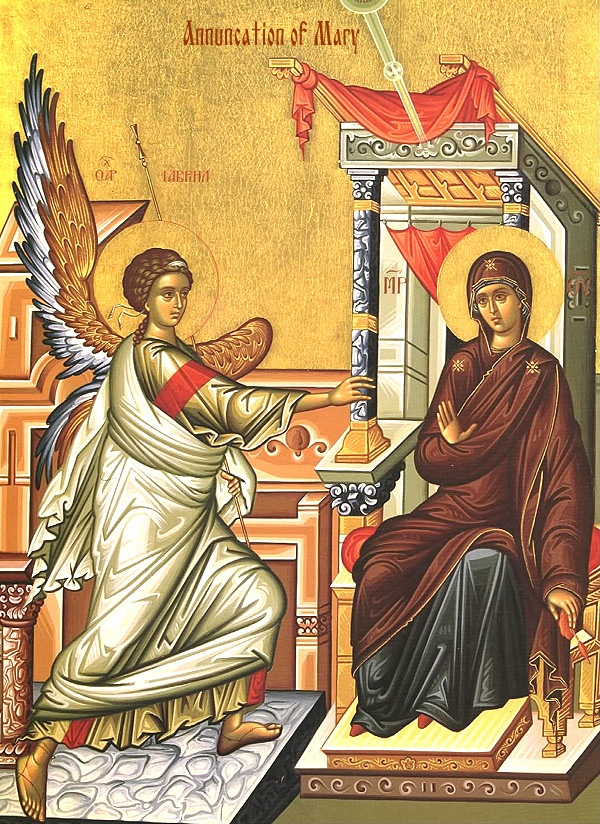
The Magnificat
My soul magnifies the Lord,
and my spirit rejoices in God my Savior;
For he has regarded
the lowliness of his handmaiden.
For behold, from now on,
all generations will call me blessed;
For he that is mighty has magnified me,
and holy is his Name.
And his mercy is on those who fear him,
throughout all generations.
He has shown the strength of his arm;
He has scattered the proud in the imagination of their hearts.
He has brought down the mighty from their thrones,
and has exalted the humble and meek.
He has filled the hungry with good things,
and the rich he has sent empty away.
He, remembering his mercy, has helped his servant Israel,
as he promised to our fathers, Abraham and his seed for ever.
— Luke 1:46–55
Comments
No approved comments yet.
Log in to leave a comment.